
Key Questions to Ask

These are questions that should help you shape your participation process.
- Do you have a clear idea of why you are engaging and what you are trying to achieve? This is important from the start.
- What do you want to get out of the engagement? Some examples include:
- Is what you are trying to achieve realistic and achievable?
- Do you have a plan? This should outline what activities will be carried out and when, who will participate, and what their roles will be. A timeline and budget will be important.
- What are your limitations? Do you have the skills and capacity, or do you need training?
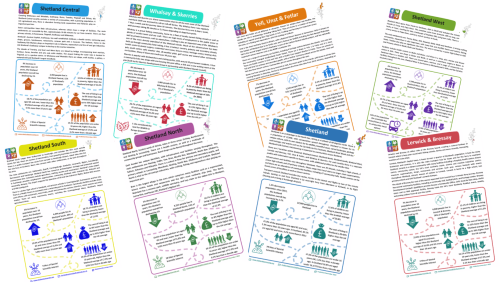
- What do you already know? Is there evidence or data which could be helpful to you? The Shetland Partnership website is a good starting point for Shetland-Wide Evidence and Data Deep Dives, and Locality Profiles.
- Has there been similar work beforehand?
- Is there an awareness around the topic or issue?
- Should anyone else be involved? For example, other stakeholders, or people with additional skills or expertise. The local Community Involvement and Development Officers are a useful starting point.
- Consider your audience – understand the community’s demographics, needs and interests. Is the participation and engagement activity for the whole community, or is it targeted?


- Which method/methods are you using? Which would suit best?
- Timing and accessibility: schedule events at convenient times and accessible locations for the community. Consider things like public transport, locations, childcare, food and catering.
- How will you make people aware of the activity?
- Make sure you follow-up and share outcomes and next steps with the community after the engagement.
- Consider whether the process will involve the collection and / or storage of personal data. A Data Protection Impact Assessment (DPIA) Screening of Full, may be required.
- Consider whether this work is a Project, requiring Project Governance, such as a Project Board and Risk Assessment.
- Have you considered any barriers to engagement, and how to be inclusive? It is important to ensure all voices are heard, especially marginalised or underrepresented groups.
- Does your organisation have a Terms of Reference, or a constitution?
- Be transparent about the process, goals and limitations of the engagement.