
Annual Report 2023/24 - Monitoring Progress
Satisfaction with Public Services/Number of Employees
Satisfaction with Public Services
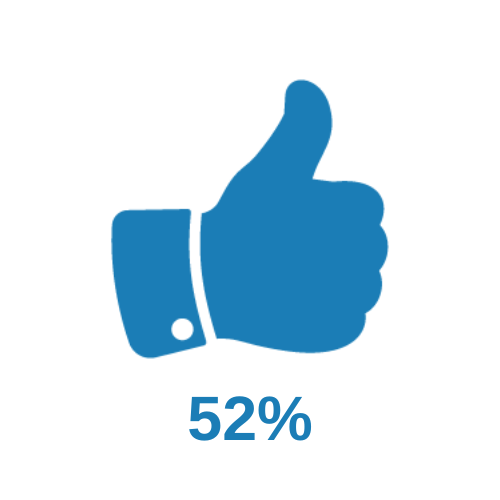
52% of people were Satisfied with Public Services in 2022, a decrease from 2021’s 58%* . Whilst Shetland had the 6th highest percentage of people satisfied with public services in Scotland that year, this is a 7% decrease from the baseline of 59% and misses the Shetland Partnership target of 65%. Except for 2018, Shetland has maintained a higher percentage of satisfaction with public services than Scotland overall. 40% of people in Scotland were satisfied with public services in 2022 compared to Shetland’s 52%. This indicator looks at three services: health services, local schools and public transport. Broken down, 81% of people in Shetland were satisfied with the quality of local schools, 80% of people were satisfied with the quality of health services and 63% were satisfied with public transport.
Number of Employees
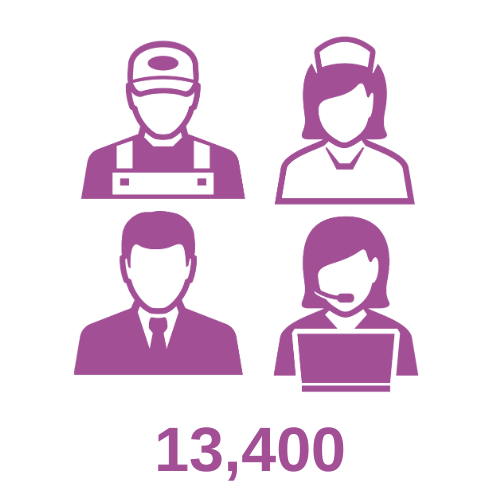 The Number of Employees in Shetland declined to 13,400 in 2022, from the previous year’s 14,200. This is lower than the 2021 target of 13,700. It is difficult to know the reasons for the decrease, but it is possible that the number of employees is stabilising following the impacts of COVID-19 and large-scale construction projects in Shetland. This indicator is impacted by small sample sizes, and figures are rounded to the nearest hundred. The NOMIS Labour Market Profile for Shetland shows that economic activity increased from 76.8% (Oct 2021-Sep 2022) to 89.1% in (Oct 2022-Sep 2023). The number of people ‘In Employment-Employees’ increased from 12,300 (Oct 2022-Sep 2023), compared to 11,300 for the same period the previous year.