
Annual Report 2022/23 - Data Updates and Analysis
Fuel Poverty / Households who do not earn enough to live well
Fuel poverty

Cost of living pressures continue to have an impact on households and communities. 31% of households in Shetland were classified as experiencing fuel poverty in 2019. Due to a change in the definition of fuel poverty by the Scottish Government the baseline of 53% reported in 2016, is no longer comparable. A lack of data for 2020 and changes for 2021 has caused issues with the production of local authority estimates from the Scottish Household Condition Survey, therefore estimates will not be available until 2024.
Changeworks’ (2023) research on “Fuel Poverty in Rural Scotland” looks at why fuel poverty is so persistent in rural Scotland, and identifies rural specific drivers which contribute to significantly higher fuel poverty levels in rural areas, when compared to the rest of Scotland. These include a cold and wet climate, a lack of affordable housing and limited access to support services. Changeworks cite Energy Action Scotland’s fuel poverty estimates from April 2022 where it was estimated that 44% of people in Shetland are in fuel poverty, the joint fourth highest in Scotland (with Dundee City and Orkney). Changeworks found that fuel poverty (36%) and extreme fuel poverty (24%) in the Highlands and Islands were significantly higher than the average for the rest of the country (24%, and 12%, respectively) in 2019.
Households in Shetland who do not earn enough to live well
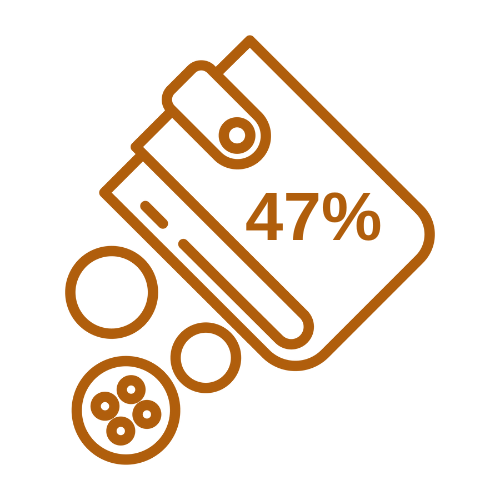
According to CACI Paycheck data (2021), 47% of households in Shetland do not earn enough to live well, based on the minimum income standard for remote and rural areas. This is significantly higher than the target set of 35% for 2021. While there are no up to date figures for 2022, it is widely known that we are facing cost pressures across the UK, caused partly by energy costs and the Ukraine war but also factors such as the cost of raw materials, supply chain issues and recruitment challenges caused by Brexit. This is likely to be exacerbated in Shetland where the cost of living is 20-65% higher than the UK mainland (Minimum Income Standard 2016).