
Underemployment
Trends and Analysis
The latest data suggests that the overall trend in Shetland is one of reducing underemployment; the positive direction of this trend means that target levels for this indicator have been exceeded. This can be accounted for by increased opportunities in Shetland meaning greater choice, and the high level of industrial activity leading to more productive job opportunities. The constrained local labour market may also impact on this if it is leading to greater competitiveness for local labour. It remains to be seen how increases in cost of living will impact on future data.
The picture across Scotland is mixed, with significant increases and decreases being recorded by local authorities across the country, impacted on by local labour conditions. The national trend is for increased underemployment, with the Scottish figure increasing by 1.6% in the period measured, whilst Shetland compares positively with a decrease of 2.7% for the same period.
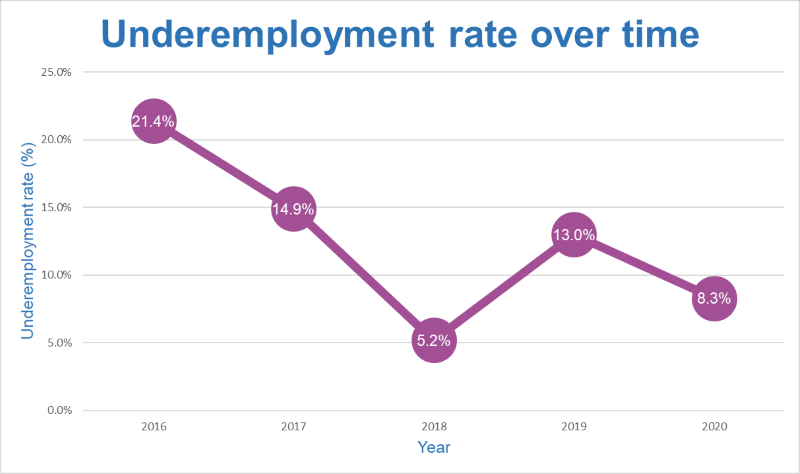
| Year | 2016 | 2017 | 2018 | 2019 | 2020 |
|---|---|---|---|---|---|
| Percentage (Calendar years) | 21.4% | 14.9% | 5.2% | 13.0% | 8.3% |
| Year | 2019/20 | 2020/21 |
|---|---|---|
| Percentage (Financial years) | 9.2% | 6.5% |
The above graph and tables show that Shetland’s underemployment rate has decreased overall since 2016. There was a fluctuation between 2017 and 2019 with a decrease to 5.2% in 2018 before rising to 13% in 2019 and back down to 8.3% in 2020. The most recent data shows that 6.5% of respondents reported looking for either: additional hours in their existing role (at the same rate of pay); an additional job (to supplement their existing job); or a different job with more hours in April 2020-March 2021. This is a decrease from 9.2% in April 2019 – March 2020. This reduction could be driven by high rates of industrial activity creating competition for labour. Shetland Island Council’s Economic Development Strategy 2018-2022 highlighted the importance of enabling communities to develop and seize economic opportunities due to underemployment and other issues hitting remote or rural areas harder.
Last updated: January 2023