
Foodbank Usage
Trends and Analysis
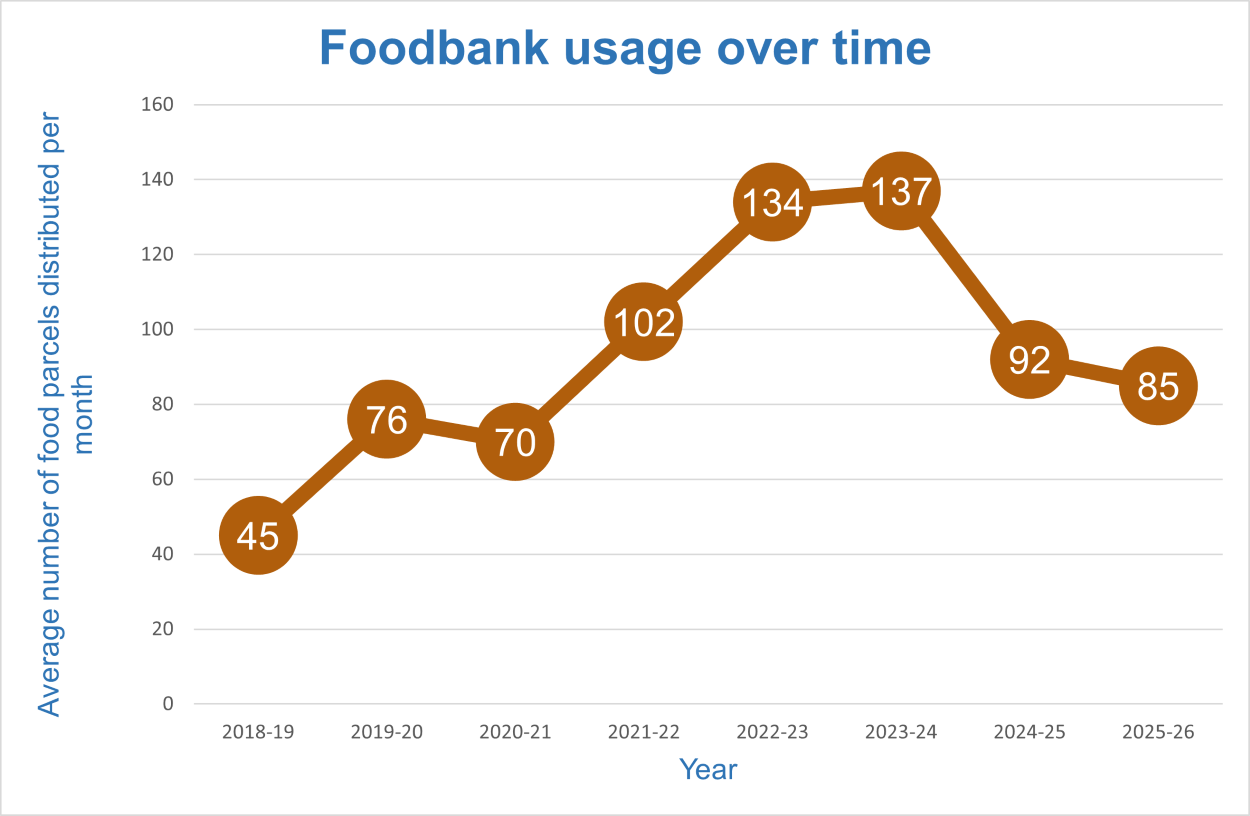
| Year | 2018-19 | 2019-20 | 2020-21 | 2021-22 | 2022-23 | 2023-24 | 2024-25 | 2025-26 |
|---|---|---|---|---|---|---|---|---|
| Average number of food parcels distributed per month | 45 | 76 | 69 | 102 | 134 | 137 | 92 | 85 |
Foodbank usage in Shetland tripled between 2018/19 and 2023/24. However, 2024/25 and 2025/26 has seen a reduction in the number of monthly parcels distributed. Until 2023-24, the average number of food parcels distributed per month in Shetland increased each year, with the exception of 2020/21. This indicator only captured a fraction of the local activity during the pandemic; it is likely that more parcels were distributed that year than the figures suggest.
In 2025/26, an average of 85 parcels were distributed per month, compared to 137 in 2023/24. These essential food supplies supported 1,620 people during the year, with approximately 30% being under the age of 16, a 13% increase on 2024/25. Figures for previous years came from both the Shetland Foodbank and Anchor for Families. However, The Shetland Family centre has not been distributing food parcels or financial assistance. The foodbank data shows an uptake since the start of 2026, predicting up to 100 parcels a month, late in the year.
There has been a rapid growth in the number of charitable food banks over the past decade throughout the UK (Bramley et al, 2021). The number of parcels provided by the Trussell Trust between April 2023 and March 2024 is almost double the amount distributed by food banks in the same period five years ago, far exceeding levels seen before the rapid increases in the cost of living in 2021/22.
In Scotland, 2022/23 saw the highest levels of need ever, representing a 30% increase from the previous year. Statistics for 2023/24 highlighted that usage remained at the record levels seen the previous year. Similarly, Shetland saw a 31% increase from the same period, based on the monthly average of food parcels distributed by Shetland Foodbank. 2024/25 saw a decrease of 10% compared to the previous year, but, the longer term trend is stark (Trussell Trust 2026). Over the last ten years, emergency food parcel distribution has doubled in Scotland, with an even greater increase for children.
It is important to recognise that data from food banks in the Trussell Trust network is just one part of the picture of need across Scotland. There is a wide range of other emergency food provision supporting people not captured in the parcel data. There are also people who are food insecure who do not receive support from food banks. This is also true for Shetland, where provision is also made by organisations such as Food for the Way and local Community Development Organisations.
In June 2023, the Scottish Government set out a Plan to tackle food insecurity, improve the response to financial hardship and start to reduce the need for emergency food parcels. The Scottish Government’s human rights approach includes prevention and response. Under prevention comes fair work, social security and reduced cost of living. The response aspect aims to make food banks the last port of call in a crisis by improving access to: emergency financial assistance, money advice and holistic support services.
Last updated: October 2026