
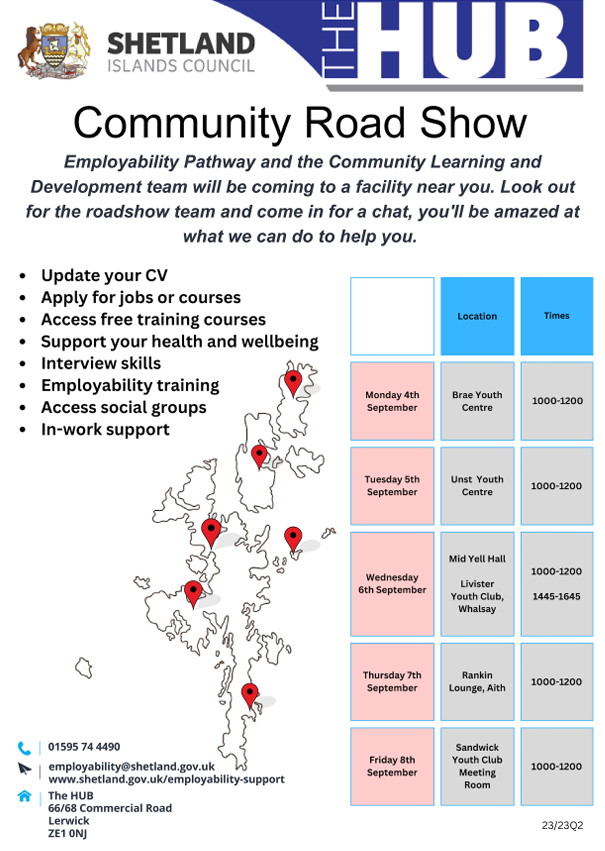
Employability Roadshow
Key Lessons and Feeding Back
Key Lessons

The team will continue to adapt the service as needed, learning from what worked well, and what did not work so well.
- The ‘No Wrong Door’ approach worked well, as staff were able to help members of the community with a variety of issues, as well as be a friendly listening ear when it was needed.
- Having a good project plan was crucial.
- Working in partnership with others was beneficial. For example, using Shetland Recreational Trust’s venues and staff members’ expertise on timings for the drop-ins.
- The team leader referred to the staff as being the project’s greatest asset. They embraced the Council’s values by taking personal responsibility, listening to people’s needs, offering help, and providing guidance where needed.
- Offering childcare, or scheduling the drop-ins alongside children’s activities was appreciated.
- The roadshows were an effective way for communities to connect with the Council, not just the Youth & Employability Service.
- Considering what people might need in addition to employment support was important. The team had fuel vouchers and food vouchers with them too, as well as items for children and older people.
- By working with SIC Communications team, the roadshow and the service itself was promoted. Lerwick drop-ins have seen an increase in people attending, and there have been more referrals to the service, suggesting a greater awareness of the service.
- Although attendance was not as high as expected, the team believe it is still worth the effort. The impact on the people they did help made the initiative valuable.
- Offering transport worked well and was appreciated, however, it was expensive. Thought will be given next time on how to continue to offer this service, but, minimise the spending.
- The budget needed to be increased, therefore a contingency fund might help others doing similar projects.
- The team feel that commitment is important. If a project does not succeed in the first quarter, the team felt it was important to run for its full duration. They felt that consistency is key for building foot traffic and making a lasting difference.
- Language matters. The team had recently shifted from saying "parents and carers" to "those with dependents" to ensure grandparents receive the same support as parents.
- Simply advertising an event at a hall does not always work—people will not always show up. The roadshow was slightly adapted each time depending on what was working well and not so well.
- The roadshow reduced to more specific hours which suited better. However, next time, they may visit the same location once a week for six weeks, instead of every few months.
- The timing of roadshows being in a typical 9-5 work day would not have been accessible for those who are working within these hours. Many people in work in Shetland experience financial hardship; alternative hours may have allowed more people who may have benefited to attend.
- The team feel it is important to keep trying, and not to be afraid to spend money when needed.
- The team have ideas about how to run it again, as well as plans to carry out further engagement with employers.
Feeding Back the Results
While there are no results to feed back with this sort of engagement, the Youth and Employability will check in with people who signed up as and when required. All aforementioned key lessons will be used to inform the future work of the service, including future roadshows.