
Annual Report 2025/26 - Data Updates and Analysis
Fuel Poverty/Businesses Struggling to Recruit Labour
Fuel Poverty
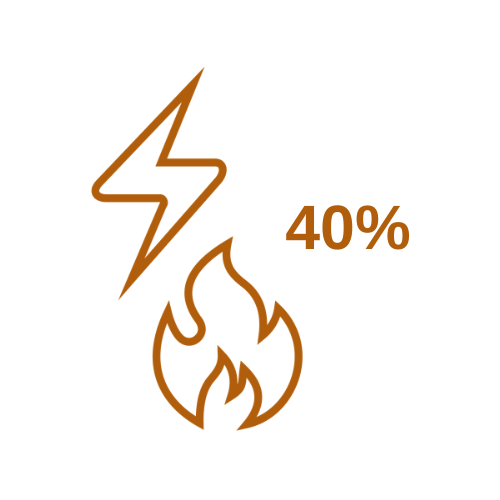
Fuel poverty levels have again increased in Shetland, since the new methodology used for the three-year average 2016/18. Levels for the three-year average 2022/24 are now 40%, an increase from 31% in 2017/19 and 27% in 2016/18, and the joint third highest in Scotland.
The Scottish Islands Data Overview (2023) shows island residents face higher fuel poverty. Many rural homes lack energy efficiency and gas grid access, relying on expensive heating fuels. The 2021 National Islands Plan survey found that nearly three quarters of island residents saw increased heating bills. Shetland's cold climate, poor insulation, and lack of cheap energy options worsen the situation.
Related case study: Warmer Homes Through Partnership.
The Rural Scotland Data dashboard shows that while rural areas have lower levels of relative poverty overall, low-income households living in rural areas face particular challenges. There is widespread evidence that rural areas, and remote and island communities in particular, experience higher costs of living for some goods and services, such as weekly food costs and fuel.
Businesses Struggling to Recruit Labour

Although there is no new data for the indicator businesses struggling to recruit labour, feedback from the Shetland Islands Skills Survey 2024 highlighted that 61% of employers surveyed had a ‘hard-to-fill’ vacancy. Whilst not directly comparable to the Employment Survey this indicator is based on, it does help to illustrate that businesses are continuing to struggle to recruit. Likewise, the March 2025 Highlands and Islands Enterprise (HIE) business panel survey found that 47% of employers in the region face a skills gap. The main barriers are short supply of required skills, business location, and lack of accommodation. Locally, Promote Shetland is working to attract people to hard-to-fill professions like teaching, social care, dentistry, medicine, and planning.