
O Da Bog: Bringing Shetland's Peatlands to Life
A creative exploration of Shetland's peatlands

How do you turn complex climate science into something people can see, hear, touch - and even taste? O Da Bog brought artists, environmental specialists and community partners together to create an imaginative, multi-sensory exploration of Shetland's blanket bogs.
Peatlands are a defining part of Shetland's landscape and have major cultural, ecological and climate significance. Yet their complexity - from carbon storage and biodiversity to traditional uses - can make the science difficult to communicate. O Da Bog was one of ten projects supported through Shetland Arts' Creative Shetland Commissioning Fund and sought to translate that knowledge into an approachable public experience.
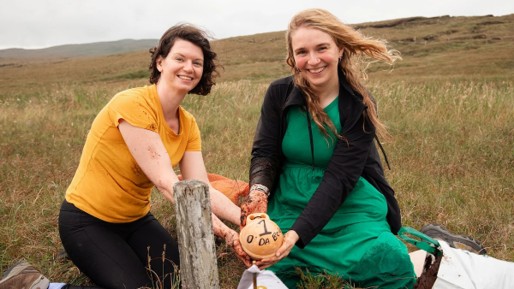
Aidan Nicol and Jenny Watt planting bog butter during O Da Bog. Image: Shetland Arts
Led by filmmaker and creative producer Aidan Nicol and storyteller and baker Jenny Watt, the project involved sound, film, textiles, music and food. Shetland Arts Development Agency and Shetland Amenity Trust - both part of the Shetland Partnership Network - worked alongside Bigton Collective, RSPB Shetland, the University of Glasgow, a local crofter and a wider team of creative practitioners and businesses.
Across spring, summer and autumn 2025, the team joined seasonal field trips at Girlsta, Tingon in Northmavine and Lumbister in Yell. Peatland ACTION officers Sue White and Ash Tavener showed the artists the Girlsta restoration site, where their measuring rod was still descending at six metres - peat laid down over more than 6,000 years. RSPB Shetland shared the importance of Lumbister for a nationally important range of moorland birds, while sound recordings, close-up film and field observations captured the bog's changing textures and wildlife.
Research was turned into short films, textiles, soundscapes, scent, stories and edible art. Examples ranged from bird-nest apple pies and cakes inspired by sphagnum moss to an experiment recreating the traditional preservation of butter in peat. Input from Dr Michael Muir at the University of Glasgow also introduced a 'cup o carbon' citizen-science activity using teacups and mobile phones to explore dissolved organic carbon in peatland water.
The work culminated in a free, three-day multi-sensory installation at Hymhus from 28th to 30th November 2025, followed by Bog Teas at Bigton Hall. RSPB Shetland and Shetland Amenity Trust contributed stalls and games, offering further opportunities to learn about peatland and how it can be protected.
The project produced a substantial body of collaborative creative work and provided an accessible route into environmental information that can otherwise feel technical. It also enabled artists and specialists from different disciplines to exchange knowledge and connect environmental science, local heritage and community participation.
Contribution to the Shetland Partnership
- Place: Celebrating Shetland's blanket-bog landscapes and making their cultural, ecological and climate importance more accessible.
- Participation: Bringing artists, environmental specialists, community organisations and the public together through fieldwork, a free installation and a community event.
- People: Supporting creative practitioners to develop new work, learn from environmental specialists and collaborate across art forms.