
Growing Wild
Creating New Habitats for Shetland's Pollinators

In January 2026, Shetland Islands Council’s Climate Change Strategy team secured funding from the Scottish Government’s Nature Restoration Fund to develop a series of small wildflower sites with Species on the Edge, Shetland Amenity Trust and RSPB Shetland. The project is creating new habitat at Breiwick Road and Rudda Court in Lerwick, as well as at Aith Junior High School and Tingwall Primary School. Its two main aims are to increase the wildflowers available to pollinators and test whether some Council grassed areas can be managed with less cutting while becoming more valuable spaces for people and wildlife.
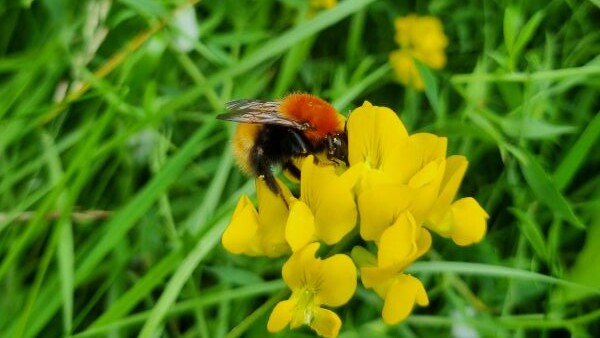
Shetland bee on meadow vetchling. Photo: Nathalie Pion.
The project brought together several strands of existing work. Species on the Edge had identified the moss carder bee, also known as the Shetland bumblebee, as a priority species in Shetland. Shetland Amenity Trust and Species on the Edge, had also collected seeds from local wildflowers during 2025. At the same time, the Council was exploring how underused green spaces could support biodiversity and be managed differently. Funding allowed the partners to combine their expertise, locally gathered seed and practical resources.
Native species, including bird’s-foot-trefoil and red clover, were sown at the project sites. Public volunteer sessions were organised to help prepare the ground and sow seeds, supported by online information and displays. Pupils at both school sites also took part, helping them learn about bees and wildflowers while building a sense of ownership of the new habitats within their school grounds.
The project has had to take account of seed availability, cost, Shetland’s weather and public perceptions of grassed areas. The sites will therefore be monitored and compared over time. The first flowers are expected during summer 2026, while the project funding will continue until spring 2028. This longer timeframe will help partners understand which approaches work best in Shetland and could inform the future management of Council land.
“We hope this project is just the beginning of creating more spaces across Shetland that support both people and pollinators. By transforming underused grassed areas into colourful wildflower habitats, we can provide valuable food sources for species such as the Shetland Bumblebee while creating attractive places for local communities to enjoy.”
Becca Jackson (SotE project officer for Shetland)
Contribution to the Shetland Partnership
- Participation: Involving volunteers and school pupils directly in preparing sites, sowing seeds and learning about local biodiversity.
- People: Giving children and communities opportunities to connect with nature and develop their knowledge of Shetland’s pollinators and native wildflowers.
- Place: Turning underused grassed areas into more attractive, biodiverse spaces that can benefit wildlife and local communities.
- Money: Testing whether reduced grass cutting could provide a more efficient and sustainable approach to managing Council land over time.