
CPR Training in Shetland
Empowering Shetland communities through lifesaving skills: focus on Bressay
The Scottish Fire and Rescue Service (SFRS), Scottish Ambulance Service (SAS), and NHS Shetland have been collaborating to enhance resilience within Shetland. In partnership with the British Heart Foundation (BHF), they have been offering free cardiopulmonary resuscitation (CPR) and defibrillation training to groups, sports clubs, youth organisations, and wider communities.
Learning CPR is important, as more than 30,000 out-of-hospital cardiac arrests happen every year in the UK (British Heart Foundation, 2024). Sadly, less than 1 in 10 people survive a cardiac arrest and early CPR and defibrillation can more than double the chances of survival, making it a crucial skill to learn.
SFRS, SAS, and NHS Shetland have been exploring different levels of CPR training. This includes teaching CPR as a learned skill in communities, encouraging individuals to become local responders, and promoting wider resilience across the isles. Their goal is to train everyone in Shetland in CPR and Basic Life Support (BLS) and to help develop resilience plans and provide safety advice. The key is to identify the needs of communities and work together.
Resilience is crucial in remote and rural communities for emergency preparedness and self-sufficiency. In remote areas, medical help can be far away. By equipping residents with life-saving skills like CPR and BLS, communities can better handle health crises independently, support each other effectively, and improve survival rates. Adaptability and collective strength lead to stronger, more connected communities.
A public session was held in autumn, organised by SRFS, SAS and the BHF alongside Bressay Community Council, Bressay Development Limited and Bressay parkrun volunteers. The event was inclusive with many community members, parkrun volunteers and young people from the island attending. At the session, people learned:
- How to recognise a cardiac arrest and what to do in an emergency situation
- Understanding when you should call 999 and what to expect
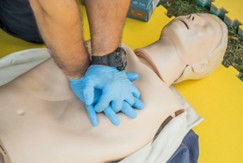
- CPR technique
- How to use a defibrillator and where you can find your nearest one
Feedback from the session was positive, with attendees appreciating the training. Organisers are open to developing the content further and have also collaborated with other community councils and groups.
Group Commander Matt Mason said:
“The impact of emergencies are deeply felt in remote and rural communities, making this training an important preventative measure. CPR training gives individuals the confidence and skills to respond effectively in a medical emergency, knowing they can make a difference. When a large percentage of the population is trained in CPR, it creates a network of potential lifesavers which improves overall community resilience. The practical experience gained is crucial in building confidence and familiarity in CPR and defibrillator usage. This important life skill will continue to be provided where there is a need.”
SFRS, SAS and NHS Shetland will continue working in partnership to ensure delivery and interventions for the communities they serve.
Contribution to the Shetland Partnership
- Participation: Communities actively involved in shaping resilience through training and practice.
- People: Supporting prevention and wellbeing by giving individuals confidence and lifesaving skills.
- Place: Building resilience in remote and rural communities where emergency services can take time to reach.